My Clients Are Elderly and/or Inactive on Social Media. Why Does My Business Need to Be Active Online?
It is a question that comes up more often than you might expect, particularly among business owners serving older adult populations in fields like home care, health services, legal advisory, financial planning, and personal care. The reasoning behind it is intuitive: if your clients are not on social media and do not spend much time online, why would it matter whether your business has an active digital presence?
The answer requires understanding something important about how decisions get made for, by, and on behalf of older adults, and the role that online research plays in that process even when the client themselves is not the one doing the searching.
Who Is Actually Making the Decision
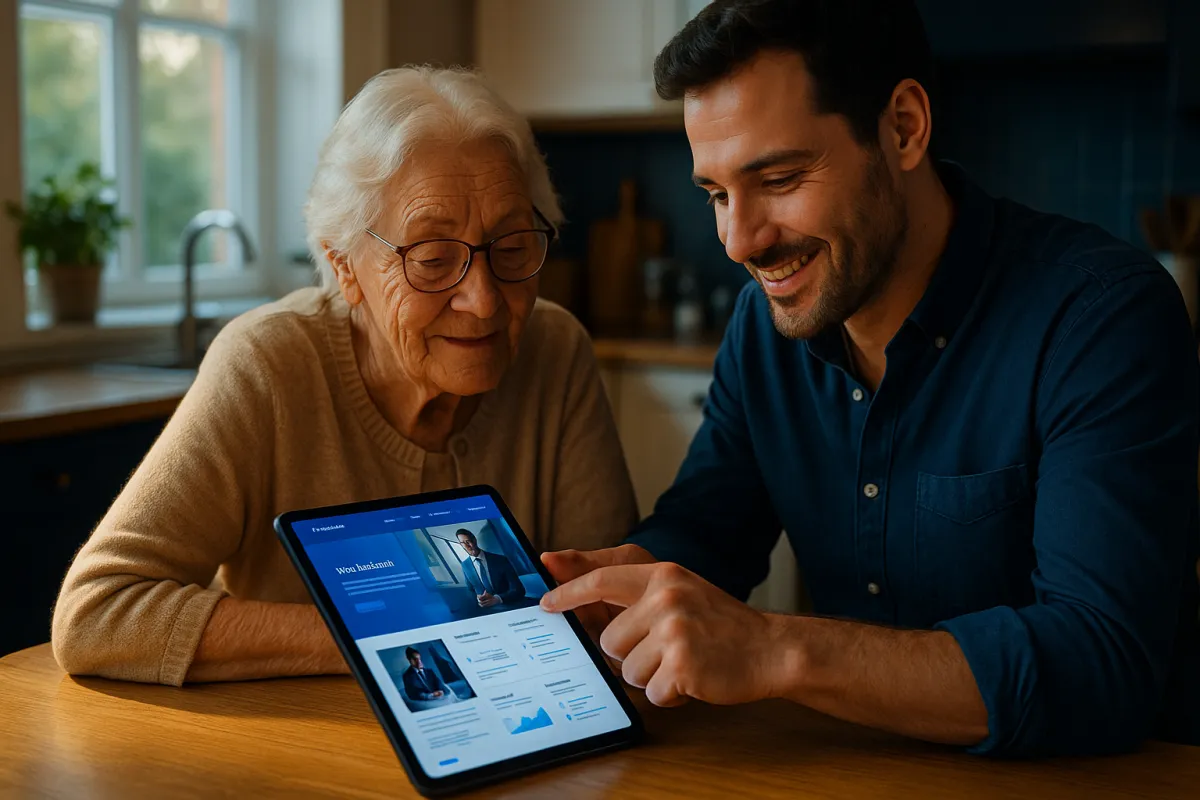
For many businesses serving elderly or less digitally active clients, the person booking the service, researching the options, and making the final recommendation is not the client themselves. It is a family member, an adult child, a caregiver, a healthcare coordinator, a trusted advisor, or a friend who has been asked for a recommendation.
These decision-making intermediaries are, as a general rule, significantly more likely to research options online before making a suggestion. When a daughter is helping her parent find a reliable home service provider, a financial advisor, or a personal care professional, she is very likely to start with Google. She will look at websites, read reviews, and form an impression of which businesses appear credible and active before she makes a recommendation to the person she is helping.
If your business does not have an accessible, professional online presence, it is invisible at the exact moment that her research is happening. You do not get to explain yourself. You do not get to demonstrate your expertise or your track record. You simply do not appear, and the decision moves forward without you.
The Technology Reality Among Older Adults
There is also a common overestimation of how digitally disconnected older adults actually are. According to AARP's 2024 Tech Trends research, approximately 89% of adults aged 50 and older in the United States own a smartphone, a figure nearly identical to that of younger adults. While social media engagement among older adults differs from that of younger generations, internet use for research, communication, and daily tasks is widespread and growing.
Many seniors actively use Google to look up businesses, read reviews before making appointments, and check websites to confirm service information, hours, and contact details. The assumption that an elderly client population means a non-digital decision-making process is not consistently supported by how older adults and their networks actually behave.
Source: AARP Research, 2024 Tech Trends and Adults 50+. https://www.aarp.org/pri/topics/technology/internet-media-devices/2024-technology-trends-older-adults/
Online Presence as a Credibility Signal
Beyond the mechanics of discovery, there is a credibility dimension that applies regardless of who is doing the searching. A professional, well-maintained website and active online profiles signal to anyone who encounters them that your business is legitimate, currently operating, and invested in presenting itself with care.
For businesses serving populations where trust is especially important, whether you are providing care, managing financial matters, working in or around a private home, or advising on consequential decisions, the credibility signals your digital presence sends carry real weight. A potential client or their representative who searches for your business and finds little or nothing is left to wonder whether your business is still active, how established you are, and whether other people have had positive experiences with you.
Conversely, a business with a clear, professional website, a populated Google Business Profile, and a consistent body of positive reviews communicates that it is active, trusted, and worth contacting. That reassurance matters enormously in high-trust service categories, and it happens before a single conversation takes place.
The Online Review Ecosystem and Older Clients
Word-of-mouth recommendations carry particular weight in communities where older adults are the primary client base. But the way those recommendations get verified has shifted significantly. When someone receives a word-of-mouth referral for a business today, online reviews are almost always the next step in their research process.
A business with no online reviews, or no visible online presence at all, can face skepticism even after receiving a warm referral. The absence of an online record creates questions that a strong referral alone cannot fully answer. A consistent record of positive reviews and professional presentation closes that gap and gives the person doing the research the confidence to make a recommendation.
You Are Marketing Beyond Your Client
Perhaps the most useful reframe for businesses in this situation is this: you are not marketing exclusively to your clients. You are marketing to everyone who influences how your clients make decisions. That includes family members, advisors, caregivers, community contacts, and the broader network of people whose search activity, review habits, and online research determine which businesses get considered and which do not.
Building a professional, active online presence ensures that your business is part of that conversation across all of those audiences. You do not have to reach every one of them directly. You simply have to be visible and credible when they look.
ContentContractor by Dillon Digital Solutions is designed to help businesses in exactly this position maintain the kind of consistent, trustworthy digital presence that serves both the clients you work with and the networks that influence their decisions.
Your clients' decision-making circle is already online. Make sure they can find you. Explore ContentContractor.